The Jug Doesn’t Lie: Sunday Gravy Around Worcester
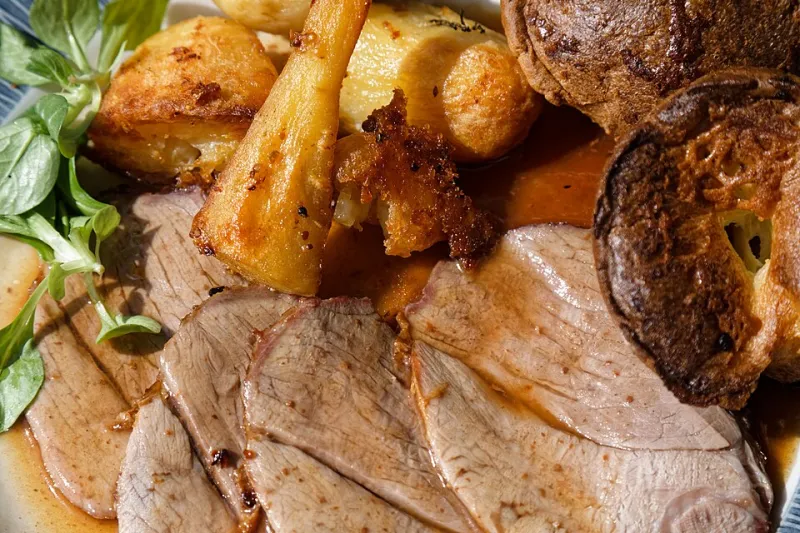
Photo: Acabashi, CC BY-SA 4.0, via Wikimedia Commons
November in Worcester has a way of making Sunday lunch feel less like a meal and more like a small act of self-preservation. The light goes early, the Severn runs high, and the only sensible response is a plate of roast meat, potatoes and something green that has been introduced to heat. But while everyone argues about crackling and Yorkshire puddings, the real test arrives in a jug.
Gravy is the part of a roast that cannot bluff. Meat can be carved generously. Potatoes can be roasted hard in fat. A café can pile the plate high and hope for the best. But gravy has to taste of something. It has to be hot, it has to have body, and it has to taste like the roast it is sitting next to rather than a packet that has been introduced to hot water at the last minute. The jug is often the tell.
What we mean by gravy
This is not a defence of wallpaper paste. Good gravy is not a thick brown sauce poured over everything until the plate looks like a building site. It is the liquid summary of the roast: pan drippings, stock made from bones, softened onion and carrot, perhaps a little flour or a reduction, salt, pepper and time. It should be dark enough to look serious, loose enough to run into the potatoes, and savoury enough that you want a second pour before you have finished the first.
In Worcestershire, there is also the local shortcut question. A splash of Worcestershire sauce is a fine thing in a gravy, but it should be a seasoning, not the whole personality. If the only flavour is vinegar and salt, the jug is doing very little work.
The jug test
We kept it simple. Over a few Sundays, we ordered roasts around Worcester—pub carveries, café plates, and one home lunch built on butcher-bought bones and stock—and asked for the gravy separately wherever possible. Then we looked at the jug before the plate. Was it warm? Did the gravy have a sheen or a greasy film? Did it coat the back of a spoon or slide off like tea? Did it smell of meat, onion and herbs, or simply of salt?
The tasting mattered more than the colour. A pale chicken gravy can be excellent if it tastes of bird and thyme. A dark beef gravy can be disappointing if it tastes of browning and cornflour. The point was not to produce a leaderboard. It was to notice how often the gravy told us exactly how much care had gone into the rest of the plate.
The carvery: volume versus flavour
Pub carveries are the great gravy optimists of Worcester. They tend to give you a jug, or at least a generous ladle, and they understand that a roast is a thirsty business. The best carvery gravy has a proper meaty depth and enough texture to cling to a roast potato without turning into a gel. The worst is thin, salty and faintly floury, pooling around the plate like it has somewhere else to be.
The tell is what happens halfway through. Good gravy soaks in and improves the potatoes. Weak gravy sits on top, goes cold and leaves a pale ring around the meat. Refillable jugs are a lovely gesture, but volume cannot rescue a gravy that has no stock behind it. A carvery that makes its gravy from the meat it has actually roasted is doing the honest thing.
Café plates: smaller jug, higher risk
Cafés doing Sunday lunch often have the most interesting gravy because they are cooking in smaller batches. That can mean real pan drippings, a properly reduced stock and a cook who tastes as they go. It can also mean a gravy made in a hurry, thickened too hard and served in a tiny jug that goes cold before the plate reaches the table.
A café jug should be hot enough to steam when poured. It should taste of the roast on the plate, not of a generic stock cube. If a café is offering beef, the gravy should have beef in its bones—literally, if possible. If it is offering chicken, a little thyme and lemon can do more than a heavy hand with gravy browning. The smaller the kitchen, the less room there is to hide.
Butcher stocks and the home cook
Worcester’s butchers do a quiet trade in the foundations of gravy: chicken backs, beef bones, pork trimmings, tubs of stock and bags of dripping. This is local food at its least glamorous and most useful. A butcher-made stock is not gravy on its own, but it is the difference between a gravy that tastes of roast and one that tastes of gravy granules.
At home, the best gravy usually happens in the tin the meat has just left. Pour off the worst of the fat, put the tin over a low heat, stir in a little flour, then add stock and scrape up the dark bits. Add the softened onion and carrot from around the roast, a bay leaf, maybe a splash of ale or cider. Let it simmer while the meat rests. That is not a recipe so much as a habit, and it is the habit that makes Sunday lunch worth the washing up.
What the jug says about the kitchen
A cold jug suggests nobody checked. A gravy that is thick but tasteless suggests the kitchen trusted colour over flavour. A gravy that is thin but full of meaty depth suggests confidence. A gravy that has split or formed a skin before it reaches the table suggests a plate that has been waiting under a lamp.
The best Sunday gravy in Worcester will not always come from the smartest room or the longest menu. It will come from a kitchen that has roasted meat, kept the bones, softened the vegetables and given the whole thing enough time. That is not a grand claim. It is just how gravy works.
So next Sunday, before you reach for the salt, taste the gravy on its own. Ask for the jug if it is not offered. Notice whether it tastes of the roast or merely of brown. The jug does not lie. It tells you whether the rest of the plate has been built on something good.