Beyond the Plot Gate: Where Worcester's Allotment Gluts Actually Go
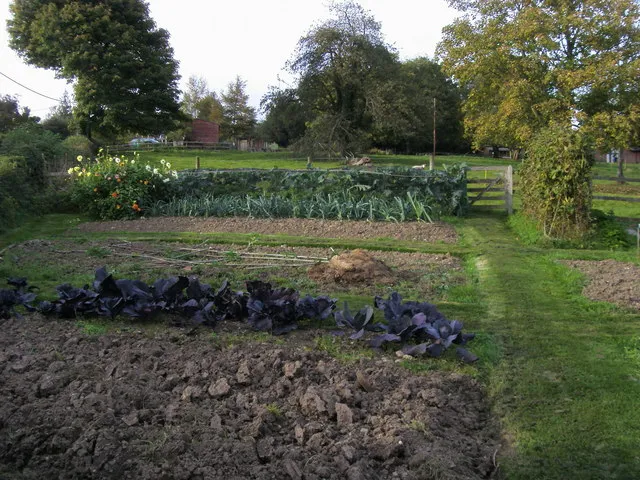
Photo: Shaun Ferguson, CC BY-SA 2.0, via Wikimedia Commons
There is a particular moment in early August when a Worcester allotment stops being a hobby and starts being a problem. The courgettes are coming in faster than anyone can fry them, the runner beans have climbed everything in sight, and somewhere at the back of the plot a marrow is quietly becoming a canoe. It is, by any measure, abundance. It is also a logistics exercise.
Worcester is well served by growing space. Plots at Diglis, St John's, Warndon and out towards Dines Green sit within a short cycle of thousands of kitchens. What happens between the gate and the plate, though, is less documented than it should be — a loose, seasonal economy of swaps, honesty boxes, café crates and carrier bags left on doorsteps.
A production line with no sales department
Margaret has worked the same plot for nearly three decades. Her greenhouse is a wall of tomatoes by mid-summer, and her answer to the obvious question is blunt. 'You don't grow a glut,' she says. 'You inherit one. One week it's fine, the next week it's a wheelbarrow.'
What she does with it depends on the day. Some goes to neighbours. Some goes to a daughter in Malvern. Some goes into chutney, which is really just a way of buying time. The rest — and this is the part that matters — goes somewhere it can be useful, usually within 48 hours of picking.
That timescale is the whole story. A glut isn't a supply chain problem so much as a freshness problem. Beans go stringy, courgettes go soft, salad goes to slime. Surplus only has value if it moves quickly, and moving quickly means knowing people.
The swap table and the etiquette of too much
Most allotment associations run some version of a trading hut or a table by the gate, and Sunday mornings in summer are when the traffic happens. The unwritten rules are consistent across sites, and worth learning before you turn up with a fistful of pound coins.
- Don't offload your problem. A glut of something everyone else is also drowning in is not a gift. Check what's already on the table before adding to it.
- Label and date it. 'Courgettes, Tuesday' tells the next person everything they need to know.
- Wash it, don't polish it. Mud is fine. Wilted is not.
- Take less than you want. Someone else is coming at eleven.
- Bring your own bags. This is not a supermarket, and nobody wants your plastic.
Honesty boxes work on the same principle. There's one on a wall near Barbourne that runs on jam jars and runner beans for most of the summer, and another out towards Battenhall where the prices are written in pencil and adjusted, apparently, by mood. The money is almost beside the point. The box exists so that nobody has to feel awkward about taking something.
The quiet route into cafés
The interesting shift of the past few years is how much plot-grown produce now ends up on café menus rather than in neighbours' fridges. It is rarely a formal supply arrangement. More often it's a chef with a car, a grower with a surplus, and a text message at seven in the morning.
A café off the Tything takes mixed crates through the summer and builds a specials board around whatever arrives. A small kitchen near Foregate Street has done the same with tomatoes. The appeal is obvious — flavour, story, and a menu that changes enough to keep regulars interested.
The limitation is equally obvious. 'We can't build a menu on a maybe,' one chef told me, and that sentence explains almost everything about why allotment produce doesn't scale. A kitchen needs consistency, invoices, allergen records and insurance. A plot produces unpredictably, in a domestic kitchen, on a schedule set by weather. The two worlds overlap beautifully for a few weeks each year and then drift apart.
Where it works, it works because nobody expects it to be reliable. Cafés treat the crates as a bonus, not a backbone. Growers treat the sale as a way of covering seed costs rather than an income. Both sides keep it small on purpose.
The calendar of too much
If you want to be useful — or simply well fed — timing beats enthusiasm.
- June: strawberries, broad beans, the first courgettes, salad.
- July to August: the peak. Courgettes, runner beans, beetroot, cucumbers, plums.
- September: apples, tomatoes finishing, squash, the first leeks.
- October: chard, kale, maincrop squash, green tomatoes for chutney.
Ask in the second half of a month rather than the first, and ask at the gate rather than by email. A grower with a glut wants it gone today, not discussed next week.
What actually happens to the rest
The honest answer is that a lot of surplus becomes preserve, and a good deal becomes compost. Worcester has a healthy culture of chutney-making and a growing number of community fridge and food-sharing schemes that take gluts when the timing lines up. Marrows become chutney, green tomatoes become pickle, and windfall apples become the sort of thing you give away in jars with handwritten labels at Christmas.
None of this is efficient. It isn't meant to be. The allotment-to-kitchen economy runs on favours, memory and a shared understanding that a glut is only a nuisance if you keep it to yourself.
If you're a cook who wants in, start small. Turn up on a Sunday morning, buy something, say thank you, and bring your own bag. The courgettes will find you soon enough.