The Six O'Clock Crust: Worcester's Dawn Bread Trail
There is a particular Worcester sound at ten to six in the morning: the ratchet of a shop shutter going up, followed by the low thump of a bread rack being wheeled into place. It is not a glamorous noise. But it marks the moment the city's day actually begins — long before the first flat white, long before the cathedral bells, long before most of us have found our second sock.
In the week after Bonfire Night, with the Severn holding a thin grey mist and the pavements cold enough to sting, I set out to follow a single loaf through Worcester. Not the supermarket version, wrapped in plastic and shipped from a distribution centre. The other one — the one baked before dawn, sold over a counter, and eaten by people who have somewhere urgent to be.
5.55am: The First Counter, Off the Shambles
The first bakery I visit sits on a side street just off the Shambles, and its lights are already on when I arrive. Inside, the air is thick with the smell of toasted crust and the radio is tuned to something quietly furious on Radio 4.
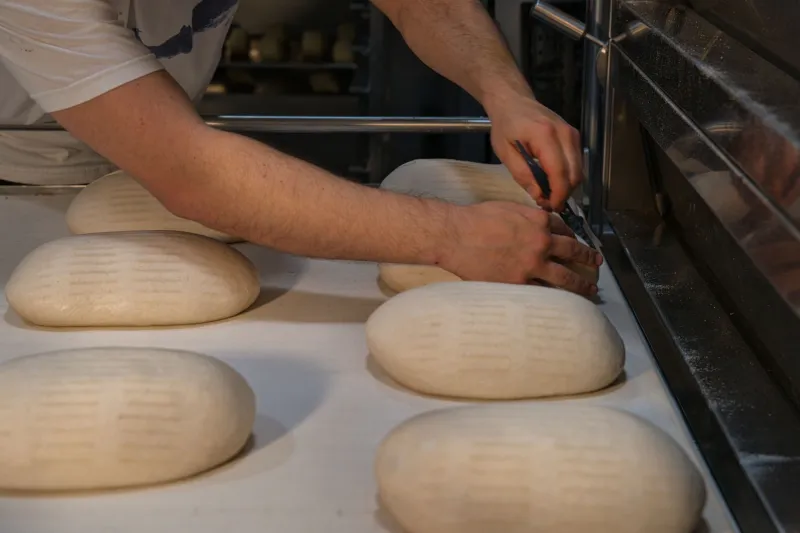
The baker here — a former restaurant pastry chef who switched to long-fermentation loaves about six years ago — is shaping the last of the morning's rye. She works fast, but not frantically. "The dough has already done the hard bit," she says. "I'm just the taxi driver now."
Her counter opens at 5.55, and there is already a small queue. A market trader in a fleece, heading for his pitch on the Cornmarket. A porter from the Worcestershire Royal, finishing a night shift and buying a loaf for the freezer. A woman with a spaniel who says, without irony, that the dog gets the heel.
The bread here is the sort that demands a proper knife: dark, chewy, sour, with a crust that cracks when you squeeze it. The flour comes from a small watermill on the Teme, stoneground and delivered in 25kg sacks. It is not cheap flour. It is, the baker argues, the whole point. "If you're going to get up at three," she says, "you may as well make it worth getting up for."
6.30am: Barbourne, Where the Dog Walkers Queue
By half past six, Worcester is starting to look like itself. Cars are on the ring road. The first buses are coughing their way along the Tything. And in Barbourne, a second bakery has just flicked on its sign.
This one is a different beast: warmer, brighter, more of a neighbourhood shop than a temple to fermentation. The baker here does bloomers, brown tin loaves, and a rotating cast of buns. On Fridays there are cardamom knots. On Tuesdays there is a rye and caraway that sells out by nine.
The queue is a useful cross-section of Worcester at 6.30am. Two dog walkers heading for Pitchcroft, their dogs eyeing the sausage rolls with open intent. A school cook collecting a standing order of rolls for a primary school breakfast club. A paramedic who has just finished a shift and is buying what she describes as "a loaf I don't have to think about".
The baker tells me that his busiest ten minutes are not when the shop opens, but at 7.45, when parents drop in after the school run. "The early lot are the workers," he says. "The 7.45 lot are the planners. They buy for the week."
7.10am: St John's, and the Wholesale Round
My third stop takes me across the river to St John's, where a bakery is loading a van for its café round. This is the part of the bread economy most people never see: the wholesale run. Before the cafés open their doors, their bread is already on a shelf in a back kitchen.
There are nine cafés on this bakery's round, plus two delis and a sandwich shop. The driver, a cheerful man in a padded jacket, has the route down to a military science. "If I'm late to the first one, I'm late to all of them," he says. "So I'm not late."
The bread here is simpler than the sourdough temple off the Shambles: white tin loaves, wholemeal batch bread, soft rolls for burgers, and a sturdy brown loaf that makes excellent toast. It is the sort of bread that gets on with the job.
The Flour Question: What's Actually in the Bag
All three bakeries make a point of talking about flour, and the story is more complicated than the marketing suggests. Worcestershire grows plenty of wheat, but most of it is feed wheat, not bread wheat. The good stuff — the heritage varieties, the strong grains with enough protein to make a proper loaf — often comes from just over the county border in Herefordshire or Gloucestershire.
The mill on the Teme that supplies the first bakery grinds in small batches, which means the flour arrives with a date on it and a bit of variation from sack to sack. "You have to bake by feel," the baker says. "You can't just follow a recipe and hope."
That variability is not a flaw. It is the difference between a loaf that tastes of something and a loaf that tastes of nothing in particular. It is also why the bread costs what it costs. A stoneground loaf is not a luxury item so much as a fair price for a slow process.
7.45am: Breakfast, and the Second Life of a Loaf
By quarter to eight, I am sitting in a café near the Cathedral with a pot of tea and two slices of toast made from the bread I bought at the second stop. It is a small, ordinary pleasure: butter melting into a proper crumb, the crust just charred at the edges.
The café owner tells me she buys from the Barbourne bakery because "it behaves". It holds up in a toastie, it doesn't fall apart under eggs, and it makes a decent bread-and-butter pudding on a Monday. "Nothing gets wasted," she says. "The ends go in the pudding. The stale bits go in the crumb."
That is the quiet logic of a local loaf. It moves through the city in stages: from the baker's hands to the trader's pitch, from the school cook's trolley to the café's toast rack, from the freezer to the bread bin to the pudding. Nothing is shipped across the country. Nothing is designed to last a fortnight. It is bread that expects to be eaten.
The Practical Bit: Which Counter Is Worth the Alarm
If you are going to set an alarm for bread, it helps to know what you are getting up for.
The side-street bakery off the Shambles (opens 5.55am): worth it for the sourdough and the dark rye, which are usually gone by 7.30. Bring a tote bag and a bit of patience — the queue moves, but it moves at the speed of people who are awake at this hour by choice.
The Barbourne bakery (opens 6.30am): the best all-rounder. Bloomers, brown tin loaves, and a bun situation that changes with the season. The 7.45 school-run rush is real, so aim for 6.45 if you want the pick.
The St John's bakery (wholesale from 6.15, counter from 7): the place for a proper sandwich loaf and soft rolls. If they have any left after the café round, buy two. The brown loaf makes the best toast in the city, and I will argue about that.
The café near the Cathedral (opens 7.30): not a bakery, but the correct end point. Eggs on toast, a pot of tea, and a view of the cathedral close waking up. It costs less than a takeaway coffee and a pastry, and it sets you up for the day.
A final word: take cash. Not every counter has a card machine at six in the morning, and the sort of baker who gets up at three has enough to do without sorting out your contactless.
The bread run is not a tourist trail. It is a working route, and the people on it are working. But there is room for the rest of us, as long as we don't get in the way of the man with the van.