Patience on the Hook: Worcester's November Game, from Brace to Table
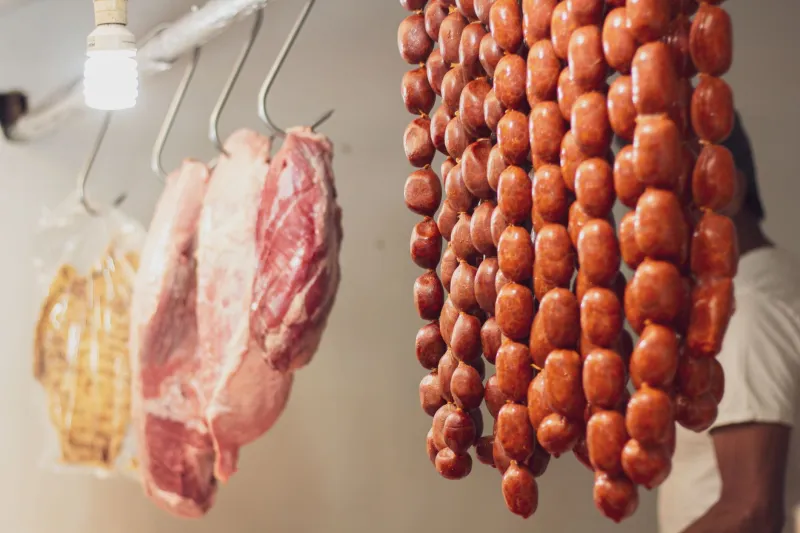
November in Worcester has a particular smell. Not just wet leaves and woodsmoke, but the cool, mineral edge of a game larder. Walk past the right back door on the right morning and you will catch it: something ancient, slightly wild, and entirely at odds with the coffee shop queue on the high street. This is the month when game season stops clearing its throat and starts singing.
For cooks in and around the city, it is also the month when pheasant, partridge and venison move from “maybe next time” to “I should really give that a go”. The good news is that Worcester still has people who will help you do exactly that — butchers and small dealers who hang birds properly, pluck and prepare them, and will talk you through the rest without making you feel like an idiot.
What “hanging” actually means
Hanging is not neglect. It is controlled patience. A pheasant or partridge is hung in a cool, airy space for a few days so the fibres relax and the flavour deepens. Too little time and the meat is tight and bland; too much and it tips into something you either love or quietly bin. The old rule of thumb — hang by the tail feather until it drops — is a tradition, not a law, and most modern dealers work to temperature and experience rather than folklore.
What matters for you is what happens before you get there. A good game butcher will tell you how long a bird has hung, whether it is young or old, and how best to cook it. If they cannot answer those questions, walk on. This is not a sector that rewards mystery.
Where Worcester cooks still find game
The city’s food scene is often framed around cafés and coffee, but there is a quieter network underneath it. County butchers, farm shops out towards Pershore and Upton, and a handful of market stalls still take game in November. Some work directly with local shoots; others buy from regulated dealers in Worcestershire and the surrounding counties. Venison is increasingly the easy entry point — lean, familiar, sold in neat cuts — while feathered game remains the more seasonal, more stubborn pleasure.
The pattern is not unique to Worcester, but it is noticeable here: game sells well when it is presented simply. A brace of pheasant in a cool bag, a label with a date, a butcher who says “roast it hot, rest it long” is worth more than a fancy display. The trade is small, and it depends on regulars.
Buying without intimidation
Start with a brace rather than a bagful. Pheasant is the gateway bird: mild, inexpensive, forgiving. Partridge is smaller, finer and quicker to cook — a good midweek roast if you are confident with timing. Venison is the least “gamey” of the lot and the easiest to treat like beef, though it rewards gentle cooking and plenty of fat.
Look for birds with dry, clean skin and no sticky smell. A little aroma is normal; a sharp, sour note is not. Ask whether the bird is young or old. Young pheasant is best roasted; older birds are better pot-roasted, braised, or turned into a pie or a stock. If you are buying venison, ask which cut you are getting and what it was doing before it reached the counter — haunch and loin are for quick cooking, shoulder and shin for slow.
And do not be shy about asking for advice. The best butchers enjoy the conversation. They would rather you leave with a bird you can cook well than one that ends up dry and disappointing.
Storing and cooking: keep it simple
Game is not fragile, but it is not supermarket chicken either. Keep it cold, keep it aired, and cook it within a couple of days of buying unless you are freezing it. If you are freezing, do it on the day and wrap it well; a brace takes up less space than you think once you have jointed it.
For pheasant, roast it hot and fast, with bacon over the breast and a little butter underneath. Rest it properly. For partridge, treat it like a small chicken but be quicker — overcooking is the classic error. Venison haunch likes a short, fierce roast and a long rest; shoulder wants red wine, stock and a low oven. Bread sauce, game chips, red cabbage, a spoonful of something sharp — quince, sloe, blackberry — all make sense. So does a plain baked potato and a glass of something robust.
The rent question
There is a harder conversation underneath all this. High street rents in Worcester are not kind to specialist traders, and game is a seasonal, low-volume business. A butcher needs cold storage, a hanging space, and customers who turn up in November and December rather than all year round. Habits have changed too: fewer people grew up plucking a bird, and online boxes and supermarket game have made the whole thing feel more convenient, if less personal.
Yet the trade survives because it is useful. Local cooks want something that feels connected to the county, and a good game dealer offers exactly that: a short chain, a known season, a conversation. It is not nostalgia. It is a practical alternative to the shrink-wrapped middle aisle.
A quiet ritual worth keeping
If you have never cooked game, this is the month to try. Buy a brace, ask the questions, roast it simply, and see what happens. Worcester’s game butchers are not asking for much — just a bit of curiosity and a little patience on the hook. That seems a fair exchange for a November dinner that tastes of the fields around the city.