The Crumb Tin and the Bone Bag: What Worcester's Traders Cook for Themselves
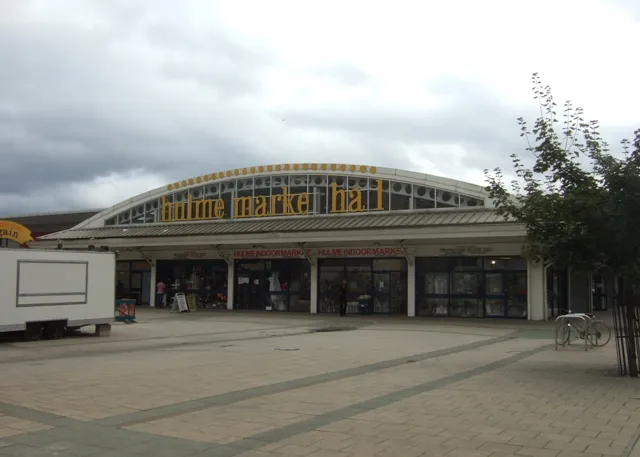
Photo: Simon Huguet, CC BY-SA 2.0, via Wikimedia Commons
Stand at any stall in Worcester's covered market on a Saturday and you'll hear the same questions on repeat. Where's it from? How long will it keep? What do I do with it? Fair questions, all of them. But there's one that gets asked far less often, and it turns out to be the most useful of the lot: what do you cook when you get home?
Over a few weeks this autumn I put that question to butchers, bakers, greengrocers and deli hands around the city. The answers were consistent to the point of being funny. Almost nobody described anything you'd put on a menu. What they described was thrift with a bit of pride attached: bones simmered on a Sunday, a loaf that's already a day old, the fruit that didn't sell, a bag of cheese rinds in the freezer door.
Names here are first names only, and a couple of portraits are composites drawn from more than one conversation, because several traders asked not to be turned into a shopping list. The habits, though, are theirs.
The butcher: the cuts nobody asks for
'We sell the fillet, we eat the cheek,' one butcher said, and he wasn't entirely joking. Behind the counter there's usually a bag of bones put aside, and in his own kitchen it becomes stock, then gravy, then the base of a Sunday braise. Feather blade, ox cheek, pig's cheek, a marrow bone for pennies — these are the things he cooks with at home, partly because they're cheap and partly because, as he put it, 'the best thing on my counter is the thing I sell least of.'
His Sunday routine is almost aggressively plain. Brown the meat hard in a heavy pan, soften onions and carrots in the fat, add bay, a spoon of Worcestershire sauce and enough stock to come halfway up. Lid on, 150C, three hours. Monday it's the same pan with a pastry lid, or piled onto toast with the gravy spooned over.
'It's the same pan twice,' he said, 'and it costs less than a supermarket ready meal.'
What to borrow: ask for braising cuts by name rather than pointing at the mince. Ask for bones — often free or close to it. Brown properly, cook low, and don't skip the Worcestershire.
The baker: the crumb tin and the soup that isn't a recipe
The baker I spoke to keeps a crumb tin. Not a bin — a tin. Heels, crusts, the ends of loaves that didn't sell, all blitzed and frozen, then toasted in olive oil with thyme and lemon zest until they're the best thing on the table. 'We sell the loaves,' he said, 'and we eat the crusts.'
He was clear that day-old bread is the better bread for soup, which is roughly how ribollita came about in the first place. Cavolo nero or savoy cabbage, a tin of beans, a heel of sourdough torn in at the end, plenty of olive oil and a pinch of chilli. Nothing clever. The bread thickens it and makes it dinner rather than broth. The same crumbs go on pasta, on roast squash, on a bowl of lentils that would otherwise look like penance.
What to borrow: slice and freeze the heel before it goes hard. Blitz the odds and ends once a week. Stop buying breadcrumbs.
The greengrocer: the box at the back
'If it's perfect, it goes on the shelf. If it's ripe, it comes home.' That was the greengrocer's summary of her own shopping, and it explains a lot about what's in her kitchen. Bruised apples become chutney. Split tomatoes become sauce. Bendy carrots go into soup with a spoon of curry powder and a tin of coconut milk, which sounds like a cliché until you taste it.
Her November standby is what she calls the market tray: celeriac, leeks, carrots and sprouts, all cut rough, tossed in oil and salt and roasted hard at 200C for forty minutes. Then dressed, while hot, with mustard, vinegar and a little honey. 'That's dinner,' she said. 'With cheese, if there's cheese.'
What to borrow: buy the ripe box, cook it the same day, roast at a higher heat than feels sensible, and finish with something sharp.
The deli counter: rinds, ends and a Friday frittata
At the deli, nothing goes off — it just changes job. Parmesan rinds go into the soup pot and get fished out at the end. The last few slices of salami and ham go into a Friday frittata with whatever potatoes are left. The scrapings from the chutney jar get loosened with oil and vinegar and become a dressing. 'Nothing in a deli goes off,' one owner told me. 'It just changes job.'
What to borrow: keep a 'bits bag' in the freezer for ends of cured meat and cheese. It makes a surprisingly good lentil soup on a Wednesday when you can't be bothered.
Five habits worth nicking from the trade
- Keep three bags in the freezer. Bones, bread, and rinds and ends. They're the difference between a weeknight dinner and a takeaway.
- Buy the ripe box. Perfect produce keeps; ripe produce needs cooking tonight. Cook it tonight.
- Cook one thing for three days. A braise becomes a pie becomes a soup. The traders all do this, and none of them apologise for it.
- Finish with something sharp. Vinegar, mustard, lemon, a spoon of chutney. It's the step most home cooks skip.
- Shop late on Saturday. Traders would rather sell it cheap than carry it home. Go at three, not ten.
A November weeknight, borrowed wholesale
Brown a piece of feather blade or beef shin in a heavy pan. Soften onions and carrots, add bay and a spoon of Worcestershire sauce, then stock to halfway. Lid on, 150C, three hours. While it cooks, quarter a small cabbage and halve a couple of apples, oil them, salt them, and roast at 200C until the edges char. Serve the beef with the cabbage, the apples and a pot of mustard.
On Tuesday, shred the leftover meat into the gravy with a tin of beans and a heel of bread torn in. That's soup. On Wednesday, if there's any left, it goes under pastry.
The deeper version of local shopping
There's a version of buying local that stops at the label: the right shop, the right sticker, the right Saturday. The traders I spoke to are politely uninterested in that version. Theirs is a set of habits — bones, crumbs, bruised apples, a sharp finish, a pan that gets used twice — and it has been going on for years without anyone calling it a trend.
It isn't romantic, and it isn't meant to be. It's just dinner, cooked by the people who sell Worcester its food, in kitchens that look a lot like yours.